FAQs about the ADT 250 Relay
How to Get Involved with American Discovery Trail in 2026.
Why the 250 Relay? In 2026, America is celebrating the 250th Anniversary of American Independence, and the American Discovery Trail is also celebrating the 35th Anniversary of the creation of the trail. The Relay is to help celebrate both and also to help local communities and state/local institutions promote the fact that the ADT passes nearby. It is not an athletic event; it is not a competitive activity. Public agencies, businesses, nonprofits, and other groups and institutions have expressed a desire to host affiliated gatherings. If you would like to sign up to receive updates, please click here.
How big is the 250 Relay? The relay is about 120 days and will occur over a period of 5.5 months, and the size on any given day will vary. On certain trails and in official wilderness areas it may be as low as three. On other days, it may be larger. For example, a local community may wish to host a celebration or educational event, so on those days the Relay team may be small, but the gathering will be larger. Press stories about the relay.
Is there an actual relay baton? Yes. We also plan on having some souvenir batons available as gifts.
What is the schedule and route? The 4th of July and Thanksgiving are two quintessential American holidays. We plan on crossing on the Golden Gate Bridge on the 4th and being at the Atlantic Ocean on Thanksgiving. This means we will be in the middle of the country in late summer and early fall. Between Denver and Cincinnati the ADT has two routes, one through Nebraska & Iowa and one through Kansas & Missouri; we will do both of them concurrently. We do not have a daily schedule in place yet. Once that is finalized it will be shared here.
Modes of transit? We have scheduled for about 120 days of travel, which means an average of 42 miles a day to get the 5,000 miles from the Pacific to the Atlantic. About half of the days will be on bicycles (60-80 miles/day), and the others will be on foot, be it walking or running. Some days may include a mixture, and possibly some may include horses, wheelchairs, or even baby carriages if local conditions are suitable. The modes of travel will be consistent with any restrictions as to how a specific section of the trail can be used.
Who can participate? The ADT is 100% on lands and roads that are fully accessible to the public. Anyone can use the ADT, though some activities may be restricted locally, such as no horses, bikes, or carts on certain segments of the trail. Registered participants are encouraged to join the ADT Society. We welcome participation by individuals or small groups of people. Members of the public are welcome to watch and join activities that are being organized and hosted by local communities and institutions when the Relay passes through. In March we will begin sharing information on how to reserve a spot as a relayer.
Is the relay a sporting event? No. The relay is a celebration of America, a celebration of the American Discovery Trail, and a celebration of community. It is educating people about American outdoors, history, culture, and nature. The relay is not a sporting / athletic event, contest or exhibition. It is also not a parade, festival, or fundraiser.
Is there a cost? There is no participation fee; we accept memberships and welcome contributions to offset the costs. Donors or members may receive a free t-shirt or other items to commemorate their involvement in the 250 Relay. In March we will begin sharing information on how to reserve a spot as a relayer.
Can I volunteer? Of course! Individuals, families, organizations, businesses, nonprofits, public agencies, and other institutions are signing up, and if you would like more information, please click here.
Will there be T-shirts, caps, or other souvenirs? Yes, we expect to have t-shirts and other items. Some items will be financed by sponsors, and for others we will collect funds to cover the costs.
Can we be a sponsor? Of course! We have sponsorships ranging from $500 to $25,000 or more. Individuals, families, organizations, businesses, nonprofits, public agencies, and other institutions are signing up, and if you would like more information, please review our 6-page info flier. The ADT is one of the top three trails worldwide with respect to distance. Sponsoring is an opportunity for entities to align your brand with the trail, American history and adventure, outdoor recreation, and local economic development. For individuals, families, foundations and others, it’s also a way to celebrate America and the great outdoors. Call Eric Howard at 800-663-ADTS for information on sponsorship.
What about groups? We are expecting the involvement of families or members of groups and organizations from the local, state, and national level. These could include Rotary, Chambers of Commerce, public agencies, educational institutions, scouting and trails groups, VFW Posts, land trusts as well as businesses and corporations that are near the trail. We also welcome involvement of affinity groups, such as a college groups or individuals with disabilities. The ADTS is nonpolitical, so the relay will not include any campaigning, and we may limit the involvement of certain groups. Please click here to sign up your group.
Will there be any special events accompanying the relay? Yes. To promote the existence of the trail and local resources (recreation and otherwise), a local community, school, business, or organization may host a celebration or educational event, so on those days the Relay team may be small, but the gathering will be larger.
Other peculiarities? The relay may need to skip over certain areas, such as ones that are closed temporarily because of fire danger, flooding, or trail work. Due to regulations on certain types of public land, the relay also may need skip over certain segments or use on-the-road detours.
Camping / Carrying things? In most areas participants will be involved for a day or less, so there is no camping. On some days there may be a car to carry gear from the starting point to the end point. The logistics in other areas mean the relay team may camp overnight or have local accommodations.
Getting there? Participants will be responsible for getting to the starting point. On some days there may be local volunteers or a “chase vehicle” to ferry people back to the start.
Is this a fundraiser? The 250 Relay was not envisioned as a fundraiser, and the budget is cost-neutral. Naturally, we welcome contributions, and any surplus will be used to help promote the trail and the numerous partner entities that manage trails at the local level.
What is the American Discovery Trail Society? We oversee a trail that serves all, connecting the people and places of the nation and providing diverse experiences while respecting the natural and built environment. We serve a wide array of individuals, businesses, and organizations. In partnership with others, we promote the enjoyment and appreciation of the outdoors, nature, and American history and culture while also encouraging greater public access. Our work has a positive influence on neighborhoods, creating prosperity, advancing small business development, and supporting safe, healthy, and stable communities. The trail often passes through communities that have a majority of low-to-moderate income individuals, small business owners, or neighborhoods, and we serve veterans, families, older populations, and people with disabilities and a range of racial profiles. The ADTS does not discriminate on the basis of race, color, religion, national origin, age, gender, gender identity, disability, or sexual orientation.
Does the American Discovery Trail cross Federal Lands? The trail crosses federal land in about a dozen states, and the Natural Resources Management Act of 2019 directed the Secretaries of Interior and Agriculture to as soon as practical install signage on Federal land at points along the trail. Many of these federal lands are mentioned in the online description of the trail. They range from the Presidio at the Golden Gate Bridge or the Arch in St. Louis to much longer stretches on NPS, USFS or BML lands in California, Nevada, Utah, Colorado, Indiana, Ohio and Maryland, among others.
Is the description of the route publicly accessible? You can zoom in on a detailed map at discoverytrail.org/adtroute. The data (turn-by-turn descriptions and GPX files) are available for download for free.
If you have questions about becoming a member, please use the form below.
updated 2/20/2026
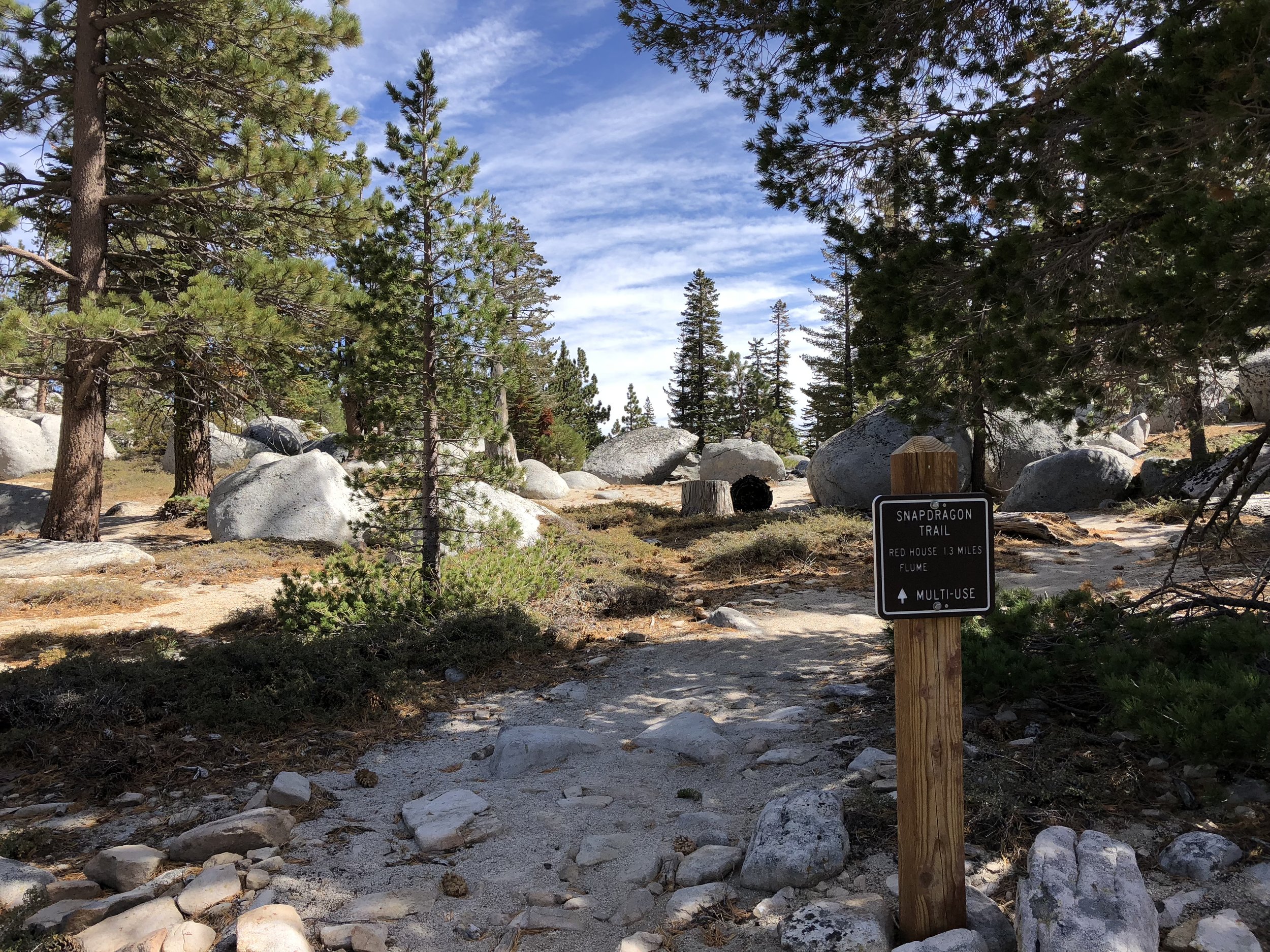

The American Discovery Trail
A coast-to-coast trail route across the U.S. connecting people with rural and urban areas, wilderness, desert mountains, forests, with other trails, and with each other.